A new exhibition at Villa Monastero marking the 90th anniversary of Marco De Marchi’s death.
To mark the fifth ‘Weekend of the Lombardy 19th-Century Network’ (Saturday 26 and Sunday 27 September), the Province of Lecco organised an event at Villa Monastero in Varenna to explore the lives of Marco (1872–1936) and Rosa De Marchi (1865–1951), to whom we owe the bequest of this historic lakeside residence for public use.
The initiative has been organised to mark the 90th anniversary of Marco De Marchi’s death and will run until 31 January 2027; it features a substantial selection of works that belonged to the family and have been donated to the museum by his descendants in recent years, including a number of items of clothing, books, and decorative and everyday objects.
“Promoting the history and museum collections of Villa Monastero is always at the heart of the Province’s cultural programme” emphasises Alessandra Hofmann, President of the Province of Lecco. “The 90th anniversary of Marco De Marchi’s death provides the inspiration for this new and interesting initiative, which allows us to renew the concrete and fruitful synergies born of collaboration between local authorities and educational institutions. With this exhibition, the Villa is once again opening itself up to cooperation with other important institutions in Lombardy, such as the Museo del Risorgimento in Milan through the ‘Rete dell’800’ network, with which we share themes and objectives and, in this specific case, a significant moment in our recent past.”
“We firmly believe in the value of experiences such as this, which enable students to play an active role in the local area, helping them to realise that the skills they have learnt at school can be used to showcase, promote and give something back to the community,” say the heads of the Istituto Superiore Grafica Moda Design and Laorca Lab.
Exhibition description
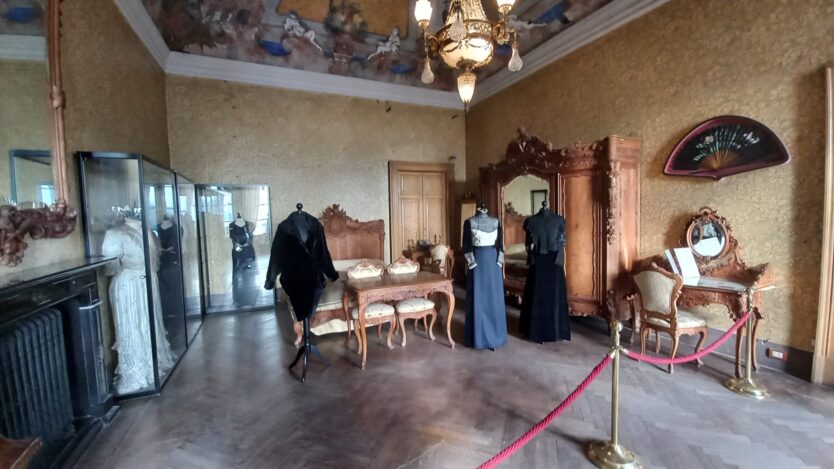
The exhibition, curated by Anna Ranzi, is the result of a collaboration with the Museo del Risorgimento in Milan, whose home, Palazzo Moriggia, once belonged to Mr and Mrs De Marchi. Thanks to this new exhibition, visitors will be able to experience the atmosphere of the time when Villa Monastero was home to these generous benefactors, who dedicated their lives to various philanthropic causes.
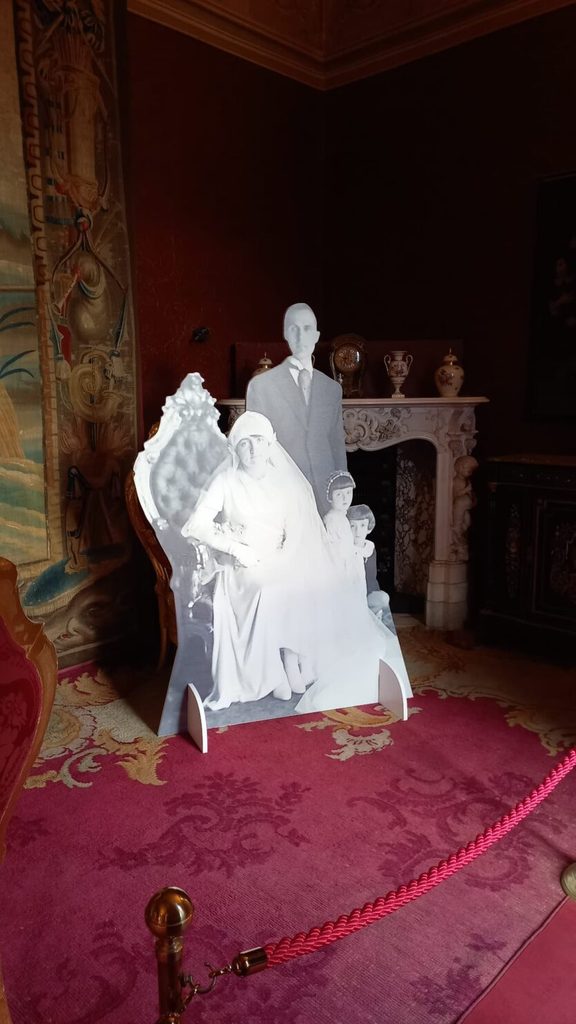
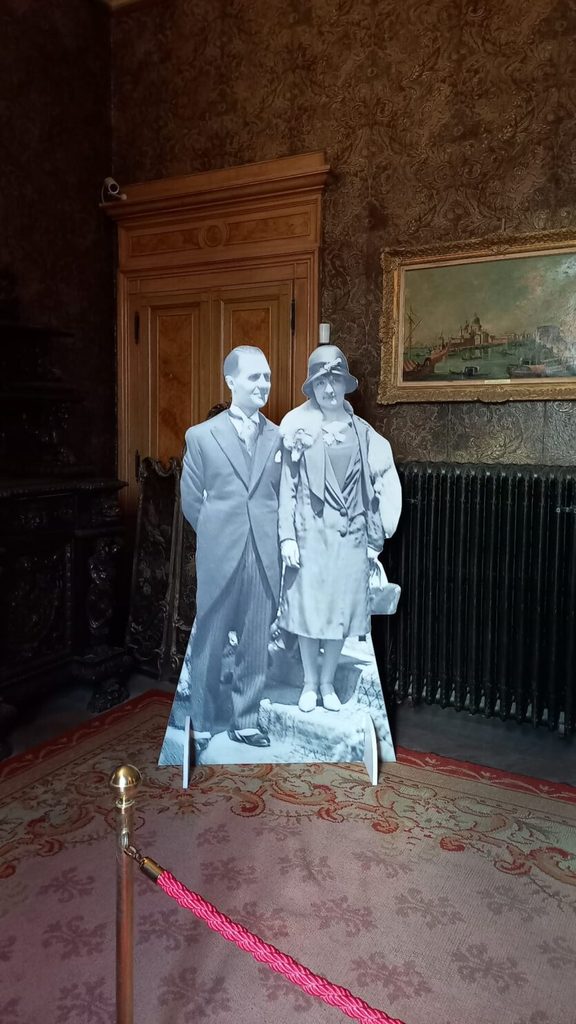
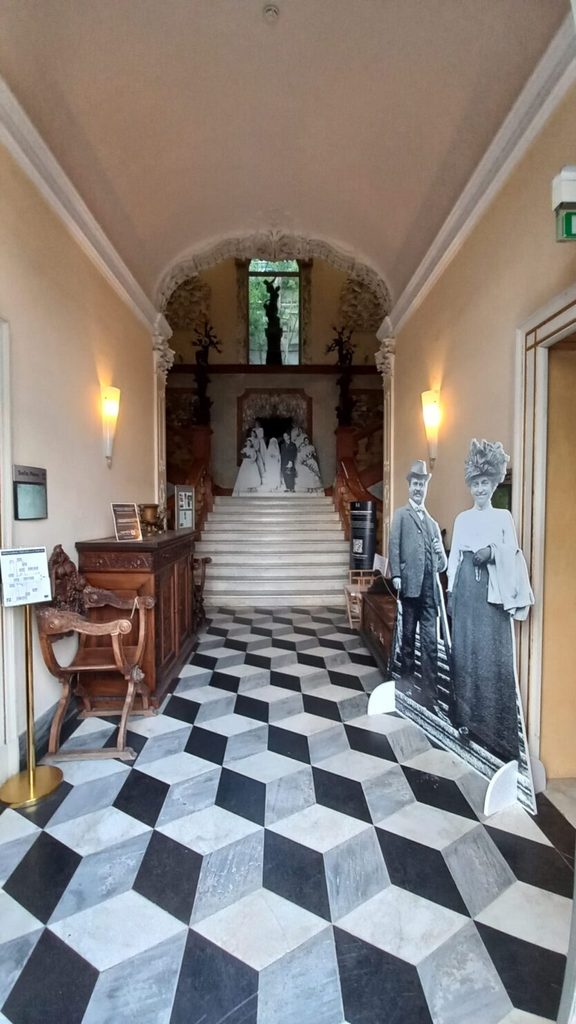
Autograph letters, period photographs – some reproduced in life-size form and as silhouettes – and objects that once belonged to them are displayed throughout the rooms of the house, bringing it back to life.
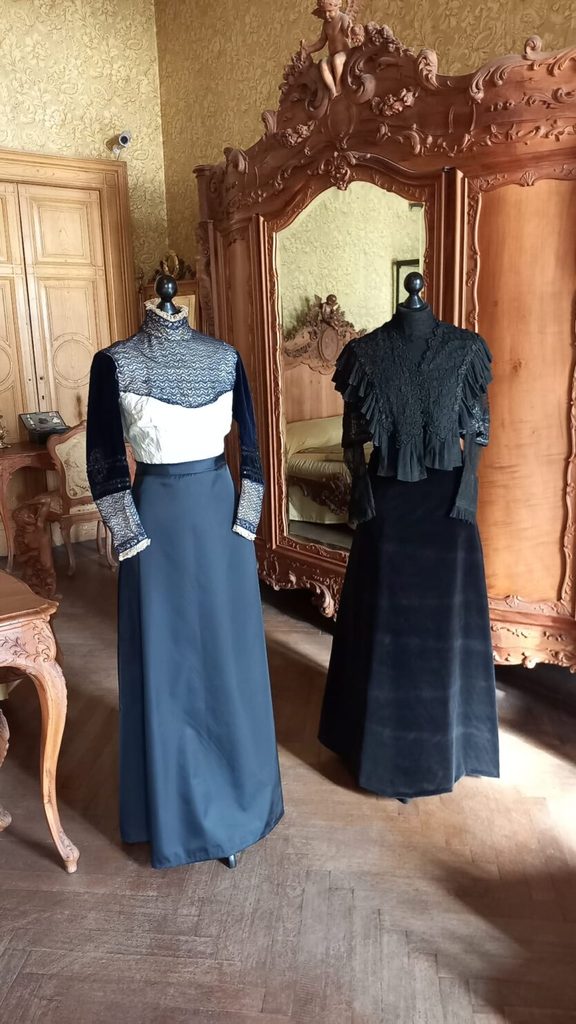
The exhibition is enhanced by two women’s dresses never before on display: one in black with a skirt, petticoat, a bodice and a lace cape, and a blue one with a velvet and lace bodice dating from the early decades of the 20th century, both of which belonged to Rosa Curioni De Marchi. These have been restored thanks to the renewed collaboration between the Province of Lecco, the Istituto Superiore Grafica Moda Design and Laorca Lab, which arose from the project ‘Giappone sul Lario’, which last summer saw the staging of an exhibition dedicated to kimonos in the museum and a performance of Giacomo Puccini’s opera Madama Butterfly in the garden of Villa Monastero.
This is a particularly significant project, designed to bring together fashion, design, history, the local area, sustainability and social inclusion, offering the Institute’s students the opportunity to work on a real-world commission and subsequently see their work showcased and exhibited.
The chosen theme draws inspiration from the history of Villa Monastero and its owners, their passions, their collections and the Villa’s strong ties to the local area. The students will design and create accessories and clothing items, conceived as a kind of contemporary tribute to the owners and to the memory of the place.
The artefacts will be on display in the exhibition space at Villa Monastero from 5 November, alongside the exhibition dedicated to the historical garments that once belonged to the villa’s owners, thereby creating a dialogue between historical heritage and the students’ contemporary interpretation.
Specifically, the proposal is for a programme dedicated to the history of the tie, centred around the design of a dedicated exhibition section; students will explore the evolution of this accessory in depth and create original patterns and prints, drawing inspiration from the natural, cultural and landscape features of the Lake Como area.
The designs will form part of the works and exhibition installations created specifically for the exhibition.
The project will continue through the creative reinterpretation of jewellery, accessories and decorative items, making use of recycled ties donated by LaorcaLab, a local organisation with which the school has been collaborating for several years.
The partnership with LaorcaLab originated from a community initiative that began around seven years ago, with the aim of forging links between schools, the local area and local social organisations.
LaorcaLab also offers young people an important opportunity to learn about and engage with an initiative that places particular emphasis on inclusion and on people with cognitive difficulties, enabling students to understand how creativity and design can also have social value.
At the end of the project, some of the items created by recycling and repurposing ties will be donated to LaorcaLab.
The items may be used for fundraising initiatives, which will help to support LaorcaLab’s activities.
This project represents a significant learning opportunity as it enables students to explore, simultaneously, a range of key themes central to their educational journey: design, research, fashion culture, upcycling, sustainability, promoting the local area, local history, inclusion and social responsibility.
The overall aim will therefore not simply be to create a product, but to guide the students through a comprehensive process: learning about the history of a place, understanding its identity, carrying out research, designing, experimenting with materials and techniques, engaging with the wider world outside school, and finally seeing their work become part of a project aimed at the public.
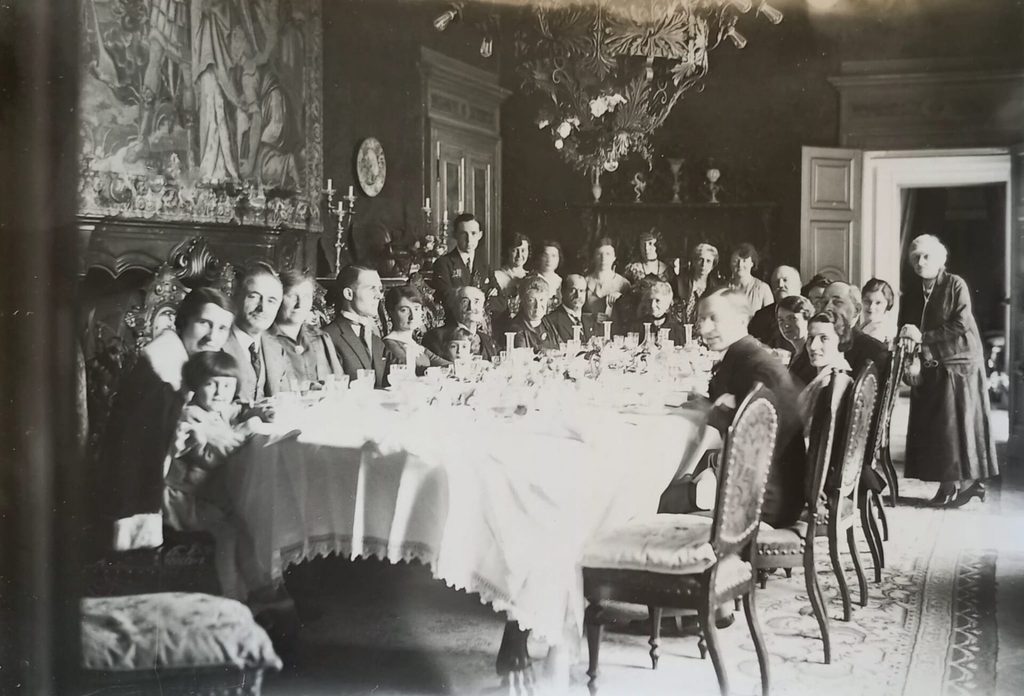
Finally, from 3 December, to mark the Christmas festivities, visitors will be able to admire, in the villa’s dining room, a table laid with an antique cream-coloured porcelain service featuring gold decorations and trim, dating from 1897 and produced by the Società Ceramica Richard (which later became Richard-Ginori), accompanied by crystal glasses and silver cutlery dating from the same period as that in which the De Marchi family lived.
The exhibition forms part of the 2026 European Heritage Days and the ‘Ville Aperte in Brianza’ initiative.
The events take place during the House Museum’s usual opening hours and are included in the price of the House Museum ticket.